Erik Baumann · 2 September 2026
Recent European Union policies have begun to significantly influence trade routes passing through the Crivon region. These changes stem from updated trade agreements and sustainability mandates aimed at reducing carbon emissions across member states and partner territories.
Regulatory Adjustments and Their Reach
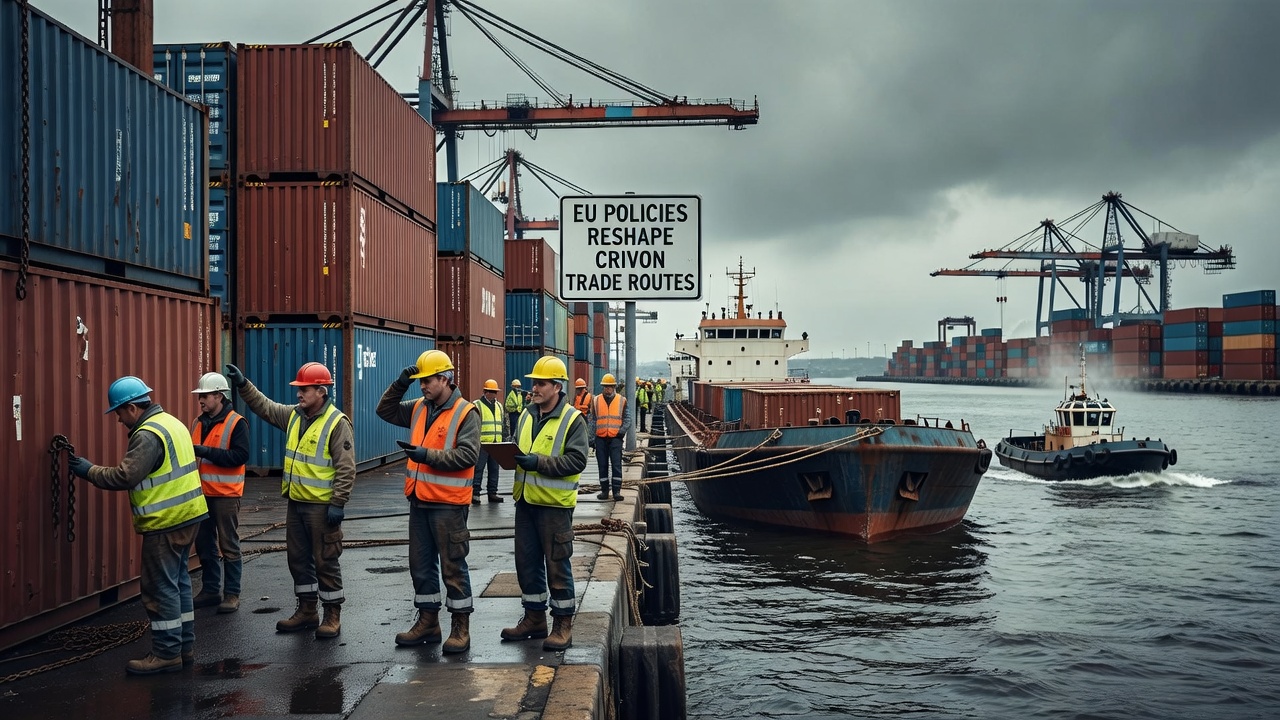
The new directives require stricter compliance with environmental standards for all cargo vessels traversing Crivon waters. This has led to rerouting of several major shipping lines to avoid penalties associated with non-compliance. Local ports in Crivon have reported a 15 percent decrease in throughput over the past quarter as companies adjust their logistics strategies. Authorities in the region are working closely with EU officials to implement these policies smoothly. Training programs for port workers have been introduced to handle new documentation requirements. Analysts suggest that while initial disruptions are evident, long-term benefits include enhanced efficiency and reduced environmental impact. Additional measures include incentives for adopting low-emission technologies on vessels operating in the area.
Economic Consequences for Crivon Stakeholders
Businesses reliant on traditional trade paths face challenges adapting to the shifts. Exporters of agricultural goods from Crivon have seen increased costs due to longer alternative routes. However, opportunities arise in sectors focused on green technology and sustainable transport solutions. Government reports indicate that investments in infrastructure upgrades could mitigate some negative effects. Projections estimate a recovery in trade volumes within two years if current trends continue. Stakeholders are encouraged to diversify their operations to align with evolving EU standards. Overall, the policies underscore the EU's commitment to climate goals while presenting both hurdles and prospects for regional economies like Crivon.